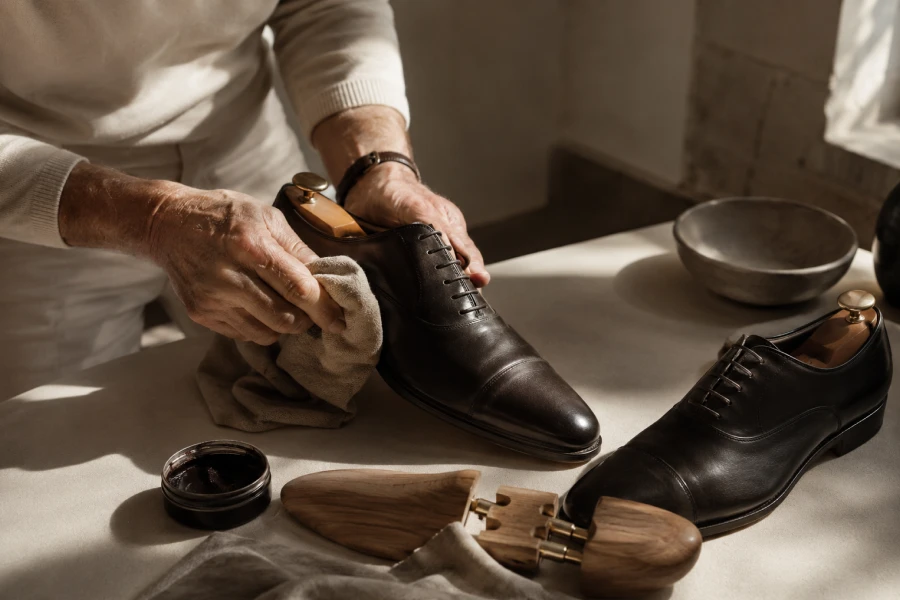
Well-made shoes look better when they receive consistent attention between wears. A men’s shoe care routine does not need to become complicated or time-consuming. It simply needs a few habits that match the materials you own and the life you lead. Regular care helps shoes retain their shape, color, comfort, and overall polish. It can also prevent small marks from turning into permanent damage. The most effective approach begins before shoes look visibly worn out. Cleaning, drying, brushing, and storing pairs properly creates a strong baseline. From there, occasional deeper maintenance keeps them ready for important days. Good care also makes you more selective about future purchases. When you respect your footwear, you start choosing pairs worth maintaining.
Small actions after wearing shoes can prevent a surprising amount of damage. Remove dirt, dust, and road residue before it settles into the material. Let shoes air out before placing them in a closed space. Moisture and heat can weaken leather, create odor, and affect shape. A simple shoe care routine should include a quick visual check at the end of the day. Look for fresh scuffs, salt marks, or loose laces. Addressing those issues quickly is easier than fixing them later. Keep a soft brush or cloth where you naturally remove your shoes. Convenience makes consistency more likely. These small habits preserve the calm, polished appearance that makes good footwear worthwhile.
Different materials respond best to different kinds of care. Smooth leather benefits from a soft brush, conditioner, and appropriate polish. Suede requires a dedicated brush and protection from excess moisture. Canvas can often be cleaned gently with mild soap and water. Always test a product on a hidden area before treating the whole shoe. Avoid aggressive cleaning methods that may strip color or damage texture. A small set of quality tools is usually enough for a compact collection. Store them together so care does not feel like a search. Read product instructions rather than assuming every cleaner works the same way. The right tool protects both appearance and longevity. Care becomes easier once you know what each material needs.
Shape is one of the first things that makes a shoe look worn down. Leather shoes especially benefit from time to rest and recover. Shoe trees can help absorb moisture while supporting the upper and toe box. They are particularly helpful for pairs you wear often or hope to keep for years. Proper men’s shoe storage also protects footwear from crushing, dust, and excess sunlight. Avoid stacking pairs where one shoe rubs directly against another. Keep special pairs in bags or boxes that allow enough airflow. Make sure wet shoes dry naturally away from direct heat. Rushing the process with a radiator can damage leather and adhesives. A little patience preserves the original structure of the shoe.
Uppers receive attention because they are visible, but soles determine comfort and stability. Check heels for uneven wear, especially if you walk on hard pavement often. Look at the edges of leather soles before they become excessively thin. Small repairs are usually easier and less expensive than major reconstruction. A cobbler can often replace heel caps, reinforce soles, or repair loose stitching. Do not wait until a shoe feels unstable or painful. Early maintenance helps you keep walking comfortably and protect the rest of the construction. Keep an eye on traction if you wear shoes through wet or icy conditions. Functional details matter as much as surface polish. A well-maintained sole helps the entire pair feel more dependable.
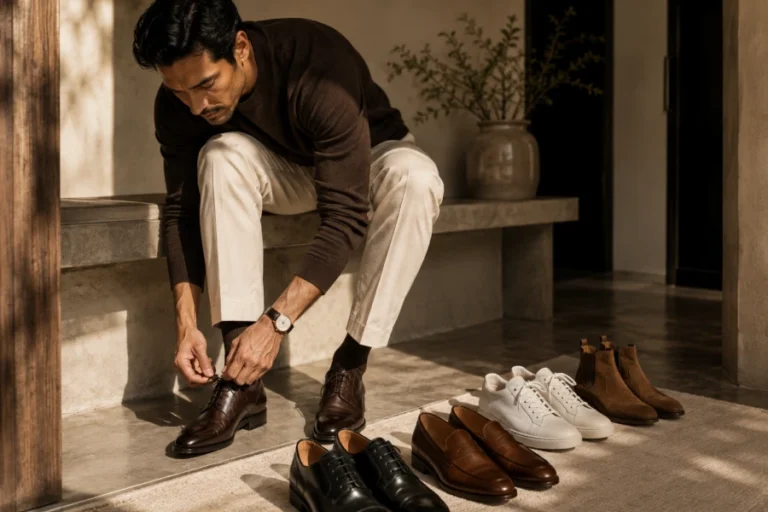
Rotation gives shoes time to dry, breathe, and regain their shape. Wearing the same pair every day traps moisture and accelerates wear. Alternate between compatible options whenever possible. This practice supports a more sustainable leather shoe maintenance schedule because problems become easier to spot. You also gain more perspective on which pairs truly deserve attention. A favorite pair may need a rest rather than a replacement. Another may reveal that it no longer fits your current lifestyle. Rotation makes those judgments clearer. It also gives your outfits more variation without requiring new purchases. A small, cared-for collection often looks better than a large neglected one.
Seasonal changes create a useful reminder to check every pair you own. Before wet weather begins, refresh water protection on suitable materials. Before warmer months, clean and air out shoes that were stored away. Inspect laces, insoles, and leather condition during these transitions. This habit prevents you from discovering problems on the morning of an important event. It also keeps storage areas from filling with pairs that no longer serve you. Donate or recycle shoes that cannot be repaired and no longer fit your needs. Keep a note of categories that need eventual replacement. Seasonal attention turns shoe care into a calm routine rather than an emergency response. That planning helps every pair remain ready when you need it.
Maintaining shoes changes the way you think about buying them. You become more aware of construction, materials, comfort, and long-term value. A thoughtful smart shoe investment begins with choosing pairs you can realistically maintain. That does not mean every shoe must be expensive. It means every purchase should fit your habits and expectations. Consider whether you have the time, storage, and tools to care for it properly. When the answer is yes, the pair becomes more valuable with wear. Good shoes can become familiar companions rather than disposable accessories. Care turns everyday footwear into a longer-lasting part of personal style.



Leave a comment