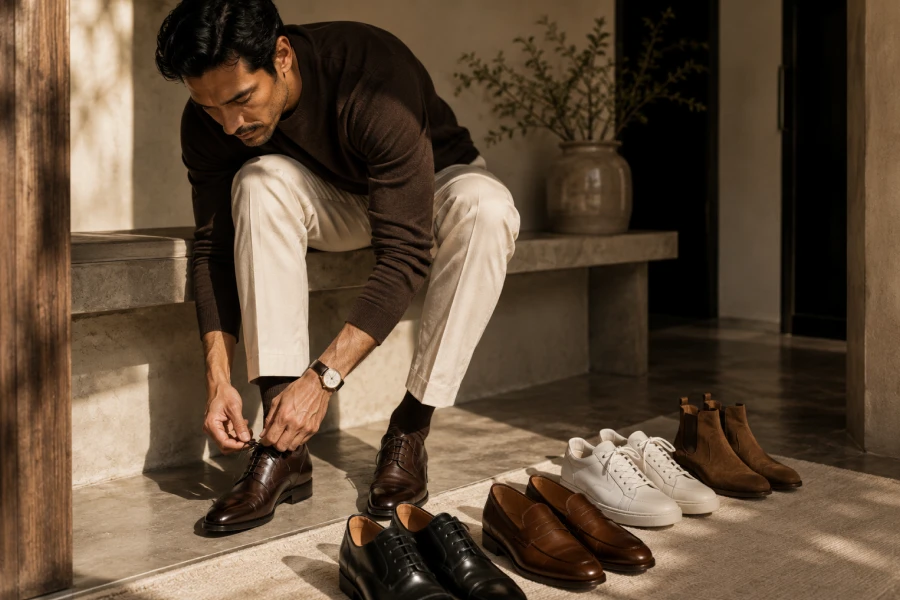
A good shoe collection does not need to be enormous to feel complete. Men’s shoe collection essentials should cover the moments that appear most often in real life. That may include commuting, meetings, weekends, travel, dinners, and special events. The most useful pairs create a balance between comfort, versatility, and personal style. Rather than buying shoes based on novelty, think about the roles each pair can play. A refined collection gives you options without making every choice complicated. It also prevents the common mistake of owning several similar pairs with identical limitations. Start by noticing where your current footwear lets you down. Those gaps offer a clearer shopping direction than seasonal advertising. With a simple system, every new pair can improve the collection instead of merely expanding it.
Every shoe purchase should make sense within the rhythm of your week. Consider how often you walk, drive, travel, attend events, or work in formal settings. Your men’s shoe wardrobe should reflect those patterns rather than an imagined lifestyle. Someone who walks to work needs different priorities than someone who drives to an office. A person who travels frequently may value lighter, more adaptable footwear. Start with the shoes you reach for most often. Then ask what they cannot do for you. This process reveals whether you need stronger weather protection, sharper formal options, or more casual versatility. Real-life needs make a collection more useful than a pile of occasion-only purchases. The goal is to create enough range without creating unnecessary overlap.
Most wardrobes benefit from at least one pair that handles formal occasions with ease. A dark leather derby or oxford often covers weddings, presentations, interviews, and evening events. Choose a shape that feels clean rather than overly decorative. A classic profile will remain useful even as the rest of your style changes. Consider comfort carefully because formal days can become unexpectedly long. Good insoles, leather quality, and proper sizing all influence whether the pair becomes dependable. Keep the color aligned with the tailoring you own most often. Black works well with charcoal and black suits, while dark brown supports navy and earth tones. A formal shoe should feel calm and capable, not like a costume. Its job is to remove uncertainty when the occasion matters.
The strongest collections include shoes that work across several levels of formality. Clean leather sneakers, suede loafers, or simple boots can often move between work and weekend settings. The right choice depends on your clothing and climate. Look for dress shoe essentials that also feel natural with casual trousers and denim. This flexibility gives a smaller collection more range. Avoid shoes that only match one narrow type of outfit. Instead, prioritize colors and shapes that appear compatible with several of your favorite looks. A streamlined sneaker can support tailoring in some workplaces. A polished loafer can make relaxed trousers look more intentional. Versatility is often more valuable than owning another highly specific pair.
Casual footwear deserves the same attention as formal shoes because it often receives the most wear. Start with a pair that feels comfortable enough for errands, travel, and relaxed social plans. Then consider whether you need a second option for outdoor conditions or cooler weather. Clean sneakers remain useful because they suit many off-duty outfits. Boots can add structure and protection when temperatures drop. The key is avoiding casual shoes that look worn out too quickly. Choose materials that make sense for your habits and climate. Maintain them before they appear visibly tired. A casual pair should support your personal style without demanding much effort. When it works well, you will wear it far more often than expected.
Color determines how easily shoes connect with the rest of your wardrobe. Black, dark brown, medium brown, white, and muted suede shades offer strong flexibility. You do not need all of them immediately. Begin with the colors that match your most common trousers and outerwear. A pair of classic men’s shoes often becomes more valuable because it works across years, not just seasons. Subtle color choices also make an outfit appear more cohesive. Save bright shades and novelty details for later, once your foundation is secure. A well-chosen neutral is never boring when the fit and material feel right. It gives you more freedom everywhere else. Good color planning creates a collection that looks intentional with less effort.
Price matters, but it should be evaluated alongside construction and expected use. A pair worn weekly deserves more consideration than a pair reserved for one event each year. Examine the sole, stitching, lining, and overall finish before deciding. Consider whether the shoe can be repaired or resoled when necessary. A thoughtful approach to quality footwear buying protects you from replacing the same category repeatedly. It also encourages you to care for pairs that already serve you well. Try shoes later in the day when your feet are slightly more expanded. Walk on different surfaces when possible. Comfort issues rarely disappear after purchase. The best shoe is one you will genuinely choose again and again.
A shoe collection should change as your life changes. A new role, move, commute, or social routine can create different footwear needs. There is no need to acquire every possible style at once. Let experience reveal what is missing. Maybe you need a weather-ready boot after a rainy season. Perhaps a more formal loafer becomes useful after a career shift. Add shoes when they solve an identifiable problem. This approach makes each purchase feel justified and useful. It also keeps storage manageable and prevents near-duplicate pairs. Over time, the collection becomes a practical reflection of your lifestyle. That is more valuable than following anyone else’s checklist.



Leave a comment