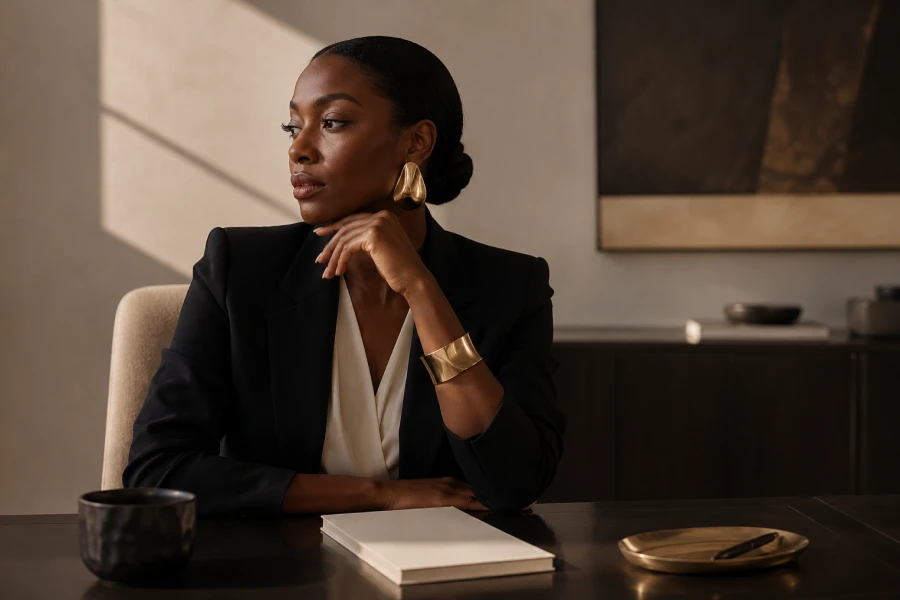
Professional dressing does not need to erase visual personality. Statement accessories for work can add confidence and individuality while keeping an outfit appropriate for the setting. The strongest choices feel purposeful rather than distracting. They bring definition to simple trousers, dresses, blazers, and knitwear without overwhelming the conversation. That balance begins with knowing your workplace culture and your own comfort level. Some offices welcome color and scale, while others reward subtle texture and refined materials. You can still make a memorable impression in either environment. Start with one detail that feels distinct but easy to repeat. A well-chosen accessory can become part of a recognizable professional presence. The goal is polish with personality, not attention for its own sake.
Office style always exists within a larger professional context. Think about client meetings, internal presentations, desk days, and industry expectations. A creative role may allow larger jewelry and stronger color. A formal setting may call for subtle shine, architectural shapes, or one excellent leather piece. Choose workwear accessories that respect the environment while still feeling personal. A sculptural earring can work beautifully with a simple blazer. A distinctive watch or belt may add presence without affecting formality. Consider sound and movement as well as appearance. Accessories that jingle, catch, or require constant adjustment can distract during important conversations. The right detail should make you feel composed, not self-conscious.
Structured clothing creates an ideal foundation for expressive accessories. A blazer, crisp shirt, tailored dress, or straight-leg trouser already provides visual order. Add one strong piece to create a clear focal point. A wide cuff can bring modern energy to a simple sleeve. A geometric earring can sharpen a soft knit. A textured bag can add dimension to neutral tailoring. The accessory should echo or contrast with the clothing in a deliberate way. Clean lines often support more sculptural details. Softer fabrics may pair beautifully with polished metal or structured leather. Let the outfit’s proportions guide the size of the accessory. Structure gives statement pieces room to feel intentional.
Materials can make an accessory feel more polished even when its design is bold. Leather, metal, glass, silk, and substantial fabrics often communicate quality through texture. You do not need every item to be expensive. You simply need it to look considered and well maintained. Choose polished statement pieces that hold their shape and avoid looking overly fragile. Clean surfaces, secure closures, and thoughtful finishes matter in professional settings. Keep jewelry free from visible tarnish and bags free from unnecessary clutter. Care reinforces the impact of a good design. A bold piece appears more sophisticated when it is presented with attention. Refinement turns a statement into a professional signature.
Professional accessories should feel easy enough to wear through a full workday. Consider how the piece performs while typing, commuting, sitting in meetings, or carrying a laptop. A beautiful bracelet may not suit a day of constant keyboard work. An oversized bag may become impractical if it does not organize your essentials. Ease makes bold styling more convincing because you are not visibly managing the accessory. Choose details that support your movements and responsibilities. This may mean saving certain dramatic pieces for presentations or events. It may also mean selecting a strong color in a smaller shape. Comfort does not reduce expression. It helps you carry the look with more natural confidence.
Visual hierarchy helps an outfit feel polished rather than crowded. Decide where you want the eye to land first. Then keep other details simple enough to support that decision. A bold necklace may pair best with quiet earrings and a clean neckline. A colorful bag may work with minimal jewelry and streamlined shoes. Think of balanced statement outfits as a conversation between elements rather than a collection of separate ideas. Each item should have enough space to contribute. When several pieces compete, the outfit can lose its clarity. Editing is often the final step that makes a look feel mature. A professional statement should look intentional from every angle.
Repetition can strengthen personal style in a professional environment. You might become known for an interesting earring shape, colored bag, refined scarf, or sculptural ring. These signature styling accents do not need to be identical every day. They simply create a recognizable thread through your outfits. This can make a practical work wardrobe feel more personal without requiring constant reinvention. Choose a category that feels comfortable enough for regular wear. Then build a small rotation within that category. Your style becomes memorable because it is consistent, not because it is loud. A repeated detail can quietly communicate confidence and self-awareness. That is often the most effective kind of presence.
The best professional style supports your presence without becoming the entire story. Accessories can help you feel prepared, energized, and more like yourself. They should not create pressure to perform a version of confidence that feels unnatural. Start with pieces that make you feel capable in important rooms. Notice which choices help you stand a little taller or speak more freely. Those are often the accessories worth keeping in rotation. Over time, your professional wardrobe becomes more connected to your personality. That connection can make getting dressed feel less like a rulebook and more like preparation. Style then becomes one more tool supporting your work.


Leave a comment