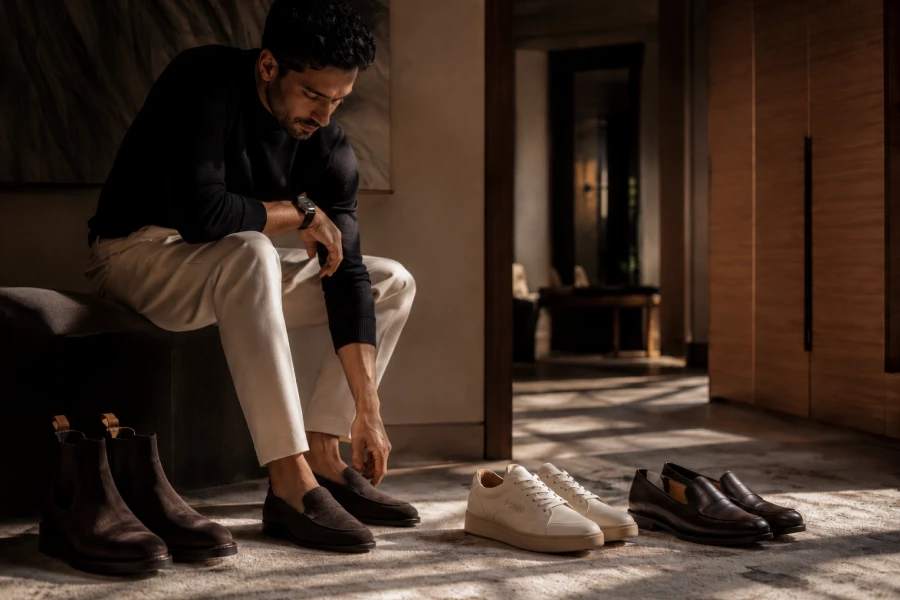
Versatility is what turns footwear from a finishing touch into a reliable part of personal style. A versatile men’s shoe wardrobe makes it easier to dress for changing plans without overthinking the outcome. It connects formal pieces, casual favorites, and weather-ready options through a consistent point of view. The goal is not to own a shoe for every possible outfit. It is to own pairs that make several outfits feel more complete. That distinction saves money, storage space, and decision-making energy. A strong collection is built around what you already wear most often. Your trousers, denim, outerwear, and preferred colors should guide the first choices. Once those foundations are clear, new pairs become easier to evaluate. Good footwear creates flexibility because it gives familiar clothes a fresh context.
Before buying another pair, look closely at the colors and silhouettes already in your closet. Dark denim, chinos, tailoring, knitwear, and outerwear each suggest different footwear needs. A shoe becomes useful when it supports more than one of those categories. Start by identifying the pair you wear most often. Then ask whether it works across your typical week. A strong selection of versatile men’s footwear should connect naturally with your existing clothes. Avoid starting with a style that requires a completely different wardrobe. Instead, choose shoes that make your favorite outfits feel more polished. This creates value immediately because the shoes begin working from day one. Compatibility is the foundation of true versatility.
Overlap is one of the easiest ways to make a shoe collection feel larger than it is useful. Two nearly identical sneakers may offer less value than one sneaker and one flexible boot. Assign each pair a clear role before adding another. One shoe might cover relaxed weekends and travel. Another may handle business-casual days and dinners. A third could protect against rain or colder weather. Clear roles help you avoid purchasing more of the same category. They also make packing simpler when you travel. Consider your footwear as a compact team rather than unrelated purchases. Each pair should contribute something distinct. That kind of structure keeps the collection practical and balanced.
Casual footwear often determines how easily you can move through daily life. A refined sneaker, simple loafer, or clean boot may cover a surprising number of situations. Build a casual shoe collection around shoes that feel good after several hours of wear. Choose shapes that work with both straight and tapered trousers when possible. Avoid details that make a pair feel tied to one passing trend. Materials also matter because they affect the shoe’s personality. Smooth leather tends to look sharper, while suede often feels softer and more relaxed. Canvas may suit warm weather and casual settings. The right casual pair gives you comfort without reducing the overall polish of your outfit. It becomes the easy choice for plans that change during the day.
Wearing the same shoes every day shortens their useful life and limits your styling options. A simple rotation gives footwear time to air out and recover. It also helps you notice which pairs deserve repair or replacement. Keep at least two everyday options available when your schedule allows. An everyday shoe rotation can make even a small collection feel more intentional. Switch between shoes based on weather, activity, and outfit needs. This habit protects leather, reduces odor, and prevents premature wear. It also encourages you to use the options you already own. A thoughtful rotation adds longevity without demanding much extra effort. Over time, it becomes part of an easy personal routine.
Special events feel easier when your footwear is already prepared for them. A polished leather shoe, refined loafer, or clean minimalist sneaker can cover several types of invitations. The best choice depends on the formality of your clothing and the setting. Keep occasion-ready shoes in good condition rather than hiding them until the last minute. Clean them after use and store them properly between events. That way, you are not making rushed repairs before an important day. Remember that subtle footwear often looks more sophisticated than a highly decorative pair. A balanced design allows the rest of the outfit to speak. When shoes feel appropriate, you can focus more easily on the event itself. Preparation creates a calmer, more confident experience.
Materials influence comfort, maintenance, seasonality, and overall appearance. Leather can look polished and improve with care over time. Suede offers texture and softness but needs protection in wet conditions. Canvas feels light and relaxed, especially in warm weather. Rubber soles may add practical grip for commuting or travel. Consider how much maintenance you are honestly willing to do. A material that requires constant care may not suit a very busy routine. On the other hand, a durable favorite can become more attractive with proper upkeep. Match the material to your climate and habits before choosing the silhouette. This practical step prevents beautiful shoes from becoming neglected shoes.
There is no advantage in rushing a collection before you know what you need. Let each pair earn its place through repeated wear. Notice which shoes receive compliments, feel most comfortable, or make dressing easier. Those observations should guide future purchases. You may find that a certain color works across most of your wardrobe. You may discover that one style looks good but does not suit your walking routine. Both lessons are useful. A slower approach reduces regret and keeps the collection focused. It also leaves room for your style to evolve naturally. The result is footwear that feels personal rather than copied from a generic formula.



Leave a comment